
The answer to “What is the best month to go to Positano, Italy?” becomes clearer when June’s 82°F average high and 0.63 inches of precipitation are compared with September’s similarly warm but wetter 1.76 inches. Positano is highly seasonal, so the best month is not decided by temperature alone. Ferry frequency, beach-club pricing, sea conditions, lodging availability, and shifting visitor patterns all change the experience in practical ways.
May offers milder sightseeing weather and lower beach rates, June brings the strongest balance of warmth, dry days, and full coastal access, while September has the warmest sea temperatures but no longer functions as a reliably quieter or cheaper shoulder month. The useful question is not simply when Positano looks best, but when its services, weather, and costs align with the purpose of the trip.
Best months for weather, crowds, and open services
Among the three strongest travel months, June stands out because it is both warm and comparatively dry: Timeanddate reports average conditions of 82°F by day, 69°F by night, and just 0.63 inches of precipitation in 2026. May and September sit close enough to June to remain highly practical, with May averaging 73°F highs and September averaging 81°F highs, but they suit slightly different kinds of trips. May is comfortable for walking, dining outdoors, and boat excursions without the deepest summer pressure, while September keeps a summer feel after the main holiday rush has begun to ease.
For most visitors, the best overall window for Positano is May, June, and September because these months combine usable beach weather with a town that is largely operating at seasonal capacity. Late spring and early fall on the Amalfi Coast usually bring warm days, milder evenings than peak summer, and crowd levels that are more manageable than July and August. The distinction matters in Positano, where narrow streets, small beaches, and limited road access can make peak-season volume feel more intense than raw visitor numbers suggest.
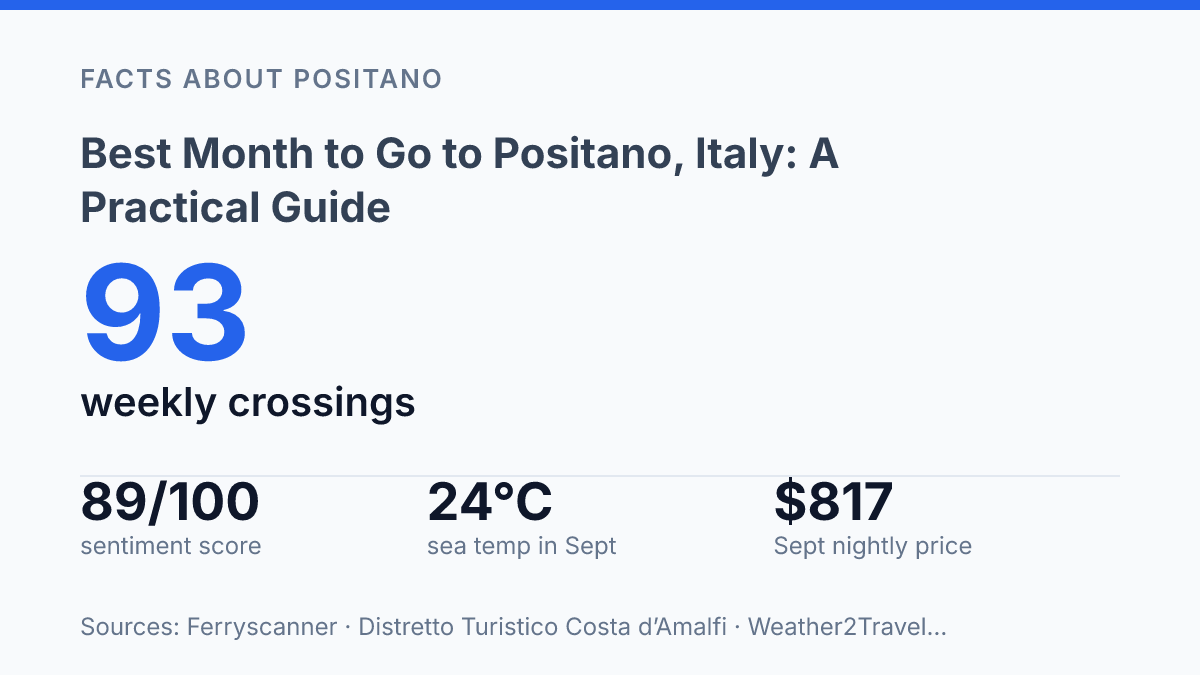
Seasonal transport is another reason these months work well. Positano.com states that Amalfi Coast ferries generally run from early April through October, although rough seas can still interrupt service. Ferryscanner lists about 93 weekly crossings from June to September, compared with around 59 weekly crossings from October to May, which makes mid- to late-season travel along the coast noticeably easier.
Beach clubs and restaurants also tend to be in full or near-full operation during this period. Lido L’Incanto, for example, lists daily opening from 8:30 a.m. to 8:00 p.m. during its April-to-October season, with higher beach-chair rates from June through September. That pricing pattern reflects the local service calendar: May offers more value before peak beach pricing, June brings the most reliable beach conditions, and September preserves much of the summer infrastructure while offering warmer sea temperatures than late spring.
How May, June, and September differ
September’s sea is usually warmer than June’s, but that does not automatically make it the most comfortable month on land. Sea-temperature data from Weather2Travel show Positano at 18°C in May, 22°C in June, and 24°C in September, which helps explain why May often suits walking, sightseeing, and terrace dining better than long swims, while September remains highly appealing for beach time.
May is the softest of the three months, with a calmer early-season feel and less pressure on narrow streets, viewpoints, and beach areas. The tradeoff is that the sea is still catching up after spring, so swimming can feel brisk, especially for visitors expecting summer-like water. Its strength is comfort rather than peak beach conditions: warm enough for outdoor meals and coastal exploring, but not yet as hot or crowded as the following month.
June is the most dependable choice for travellers prioritising swimming, boat days, and warm evenings. Conditions are generally settled enough to make sea-based plans feel less speculative, and the water has warmed noticeably from May. The drawback is demand: warmer weather tends to coincide with higher room rates and more day-tripper movement, so the month that performs best for weather may not feel the easiest for crowd-sensitive travel.
September works best as a late-season balance rather than a simple bargain. The sea is at its warmest of the three, and crowd pressure usually eases after August as school and work routines resume in many markets.
Lodging, however, can remain expensive: Likibu’s 2026 figures list average nightly rental prices at $633 in May, $726 in June, and $817 in September, indicating that late-season appeal is reflected in pricing. For many visitors, September’s value lies in warm water and a less intense atmosphere, not necessarily in lower costs.
What changes outside the ideal window
Positano’s least balanced months usually split into two problems: July and August have too much demand for the same narrow roads and beach space, while cooler months have fewer services to support even modest plans. In midsummer, the issue is not that the town is difficult to enjoy in every sense, but that heat and holiday traffic make ordinary logistics less forgiving. Beaches are at their fullest, ferry departures draw heavier queues, and road transfers can slow sharply because the Amalfi Coast has limited room for cars, buses, taxis, and pedestrians moving through the same constrained routes.
Local demand patterns are also becoming less simple than a traditional high-summer peak. Positano Notizie reported on August 6, 2025, citing the Distretto Turistico Costa d’Amalfi, that July and August 2025 were down 8–10% in visitor presences year over year, while September and October were gaining strength. That shift helps explain why late-season travel is not automatically quiet, but it does not remove the practical pressure of midsummer days, when beach time, boat departures, and transfers are all competing for peak-capacity space.
Outside the main warm-weather operating period, the tradeoff reverses. Winter and early spring can bring lower accommodation prices, quieter stairways, and a more local rhythm, yet fewer beach clubs are open, ferry service is reduced, and sea conditions are more likely to disrupt boat-based plans. The result is a narrower margin for flexible sightseeing: a route that would be simple by ferry in warmer months may require a bus connection, a private transfer, or a longer road journey.
Reduced service also changes the character of the stay. Restaurant choice can contract as seasonal venues close or limit opening days, sea-based activities such as boat tours and beach-club days become less dependable, and day trips to Amalfi, Ravello, Capri, or other coastal stops need more advance checking. These months can still suit travelers focused on scenery, walking, photography, or quiet village atmosphere, but they are less balanced for visitors expecting Positano’s easiest mix of beach access, dining choice, ferry mobility, and warm-weather leisure.
Choosing the right month by travel priority
The clearest choice changes once “comfort” is separated into beach reliability, walking ease, and crowd tolerance. For travelers who want the most dependable beach-focused stay, June is the strongest fit because it combines established seasonal services with warm conditions before the heaviest late-summer pressure. This makes it better suited to days planned around Spiaggia Grande, beach-club reservations, boat outings, and evenings outdoors, especially when the priority is a low-risk warm-weather itinerary rather than the quietest possible village atmosphere.
May is better when the trip is built around sightseeing, coastal movement, and a quieter base in Positano. The weather is generally suitable for walking the steep lanes, visiting nearby Amalfi Coast towns, and eating outdoors, while demand tends to feel less compressed than in the core summer period.
Its main limitation is beach emphasis: May can work well for sitting by the water, but it is less dependable for travelers who consider daily swimming central to the trip. For visitors who want good weather with slightly lower pressure on hotels and ferries, it is often the most comfortable practical compromise.
September suits a different type of beach traveler: one who values warm sea temperatures and a softer post-summer rhythm more than the driest possible conditions. Positano still feels fully seasonal, but the atmosphere can be calmer than the height of summer, particularly after the strongest August travel wave has passed. This month is especially appealing when swimming remains important, restaurant choice still matters, and the desired experience is warm but less intense.
The decision is therefore less about naming one universal winner than matching the month to the trip’s main constraint. Choose June for the most reliable beach conditions, May for quieter sightseeing with good weather, and September for warm water with a gentler feel after peak summer.
What shifting demand means for Positano timing
June stands out because it reduces several forms of uncertainty at once: rain risk is lower, ferry access is stronger, and beach-season services are fully active before late-summer demand patterns intensify. That advantage may become more meaningful as local reporting suggests September and October are absorbing more visitors, with July and August 2025 presences down 8–10% year over year while early autumn demand strengthened.
Travel timing on the Amalfi Coast is becoming less about avoiding the old peak season and more about identifying the month with the fewest practical compromises. For Positano, the clearest planning consequence is simple: book June early for balance, and treat September as a premium swimming month rather than a quiet-value alternative.
Frequently Asked Questions
Q: What is the best month to go to Positano, Italy?
A: May, June, and September are generally the best months to visit Positano. These months combine warm weather with fewer crowds than the peak summer period, while ferries, beach clubs, and restaurants are usually fully operating.
Q: Is Positano too crowded in July and August?
A: July and August are typically the busiest months in Positano because they fall in the peak summer travel season. That usually means higher prices, fuller beaches, and more competition for restaurant reservations and ferry space.
Q: When is the weather warm enough for the beach in Positano?
A: Beach weather usually begins in late spring and continues into early autumn. May, June, and September tend to offer warm temperatures that are comfortable for swimming and outdoor dining without the most intense summer heat.
Q: Are ferries and beach clubs open outside peak summer?
A: Many of Positano’s tourism services run on a more limited schedule in the shoulder seasons, especially early spring and late autumn. May, June, and September are preferred because local ferries, beach clubs, and restaurants are generally open and easier to access.
Q: What month is best for avoiding crowds in Positano?
A: September is often the best choice for travelers who want a calmer atmosphere without sacrificing summer-like conditions. It usually offers warm weather after the peak-season rush, which can make sightseeing and dining more manageable.